What districts are
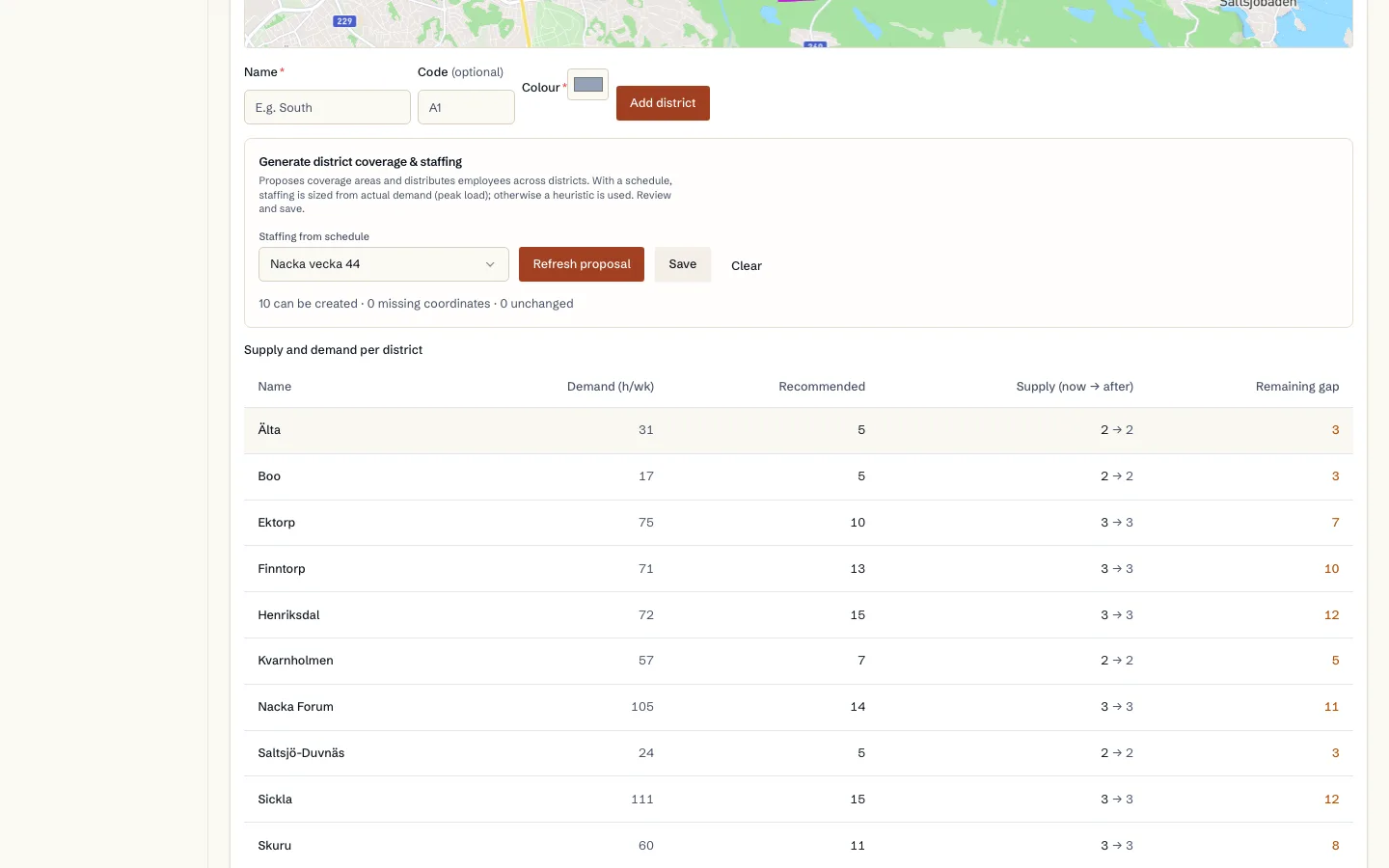
A district is a smaller area inside a unit. It helps Caire understand whether clients and employees belong to the same local operating context.
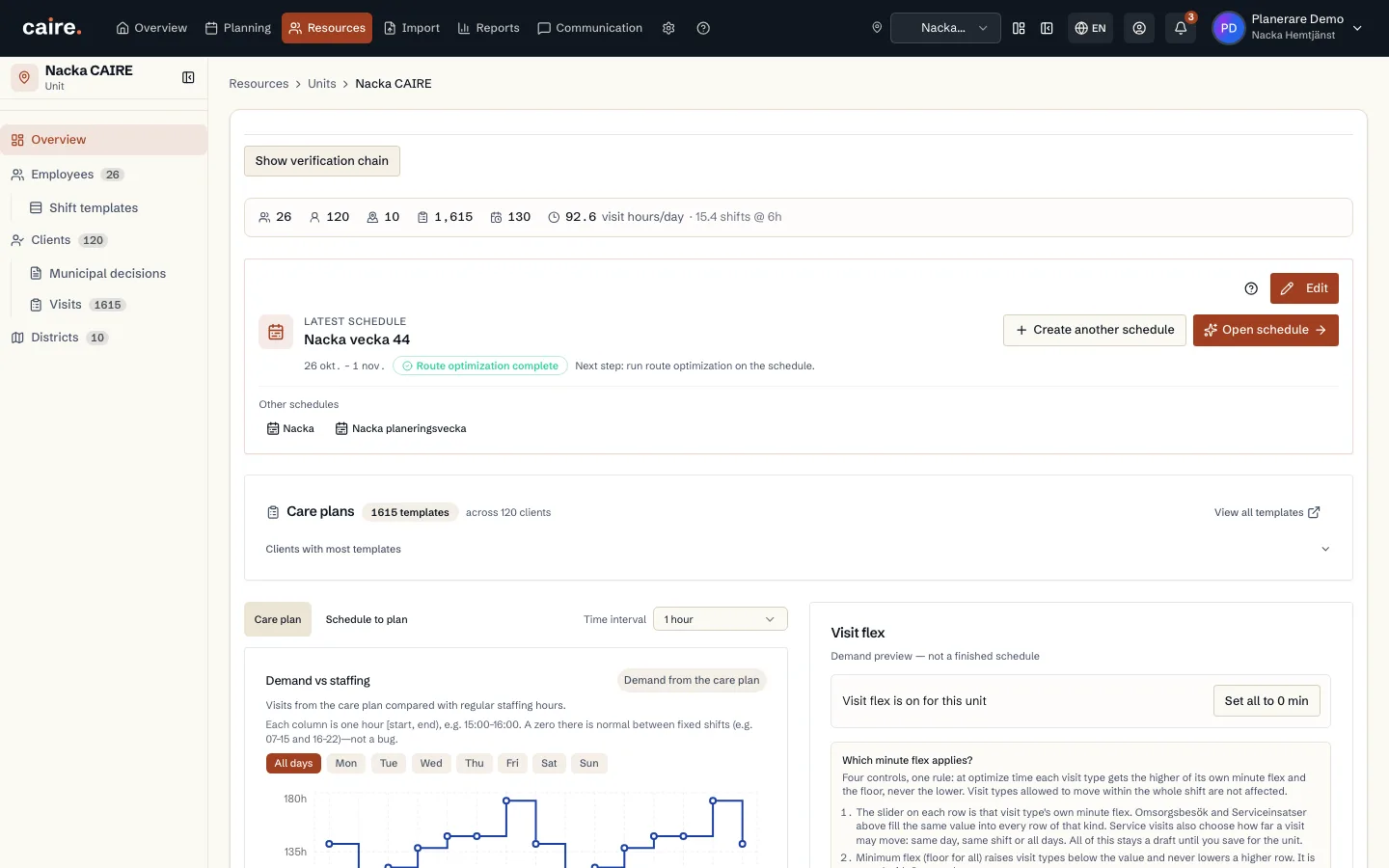
Unit
The planning boundary: the team, clients, employees, and period scheduled together.
| Field | Level | Why it matters | Used for |
|---|---|---|---|
| Name | First schedule | Makes the unit selectable in schedules and resources. | Planning, filtering, and reports. |
| Address and coordinates | First schedule | Provides route start when employees have no explicit start point. | Routes, travel time, and data readiness. |
| Districts | Better metrics | Splits an area into local groups without creating separate schedules. | Local capacity, route fit, and continuity diagnostics. |
District
A local area inside the unit for geographic matching.
| Field | Level | Why it matters | Used for |
|---|---|---|---|
| Coverage area | Better metrics | Describes the district's geographic boundary. | Route fit and local bottlenecks. |
| Client coverage | Better metrics | Shows demand in the district. | Supply-demand and continuity. |
| Employee coverage | Better metrics | Shows local capacity. | Capacity gaps and replacement suggestions. |
How it affects the schedule
When both clients and employees have districts, Caire can show whether a solution uses local capacity or whether routes cross area boundaries because of a shortage.