Founder story

    Everything had led me here

    Twenty years in technology taught me how to build. Five thousand home-care visits showed me what needed building.

    A personal story about losing control of your own day, seeing home care from the inside, and deciding to repair the structures around care.

    Björn Evers, founder of CaireJuly 15, 20268 min read
    Björn Evers, founder of Caire, sitting in his wheelchair at the office
    Björn Evers founded Caire after experiencing home-care planning firsthand through more than 5,000 visits.
    When the MS diagnosis came
    Age 35
    Home-care visits over roughly five years
    5,000+
    Experience building technology
    20 years

    When life changed direction

    I was diagnosed with multiple sclerosis when I was 35. My body changed, and over time so did the help I needed.

    Throughout my career, I had worked with technology, complex systems, and operations with many dependencies. I knew how to build platforms that must work for many people at once. Now I was on the other side of technology, depending on someone else's system for my daily life.

    Home care made it possible for me to keep living, working, and contributing. I met committed care workers who solved problems every day through experience, improvisation, and a great deal of personal responsibility. At the same time, I saw how much of their energy went into compensating for tools that could not hold the day together.

    An ordinary day

    Waiting for a schedule I cannot see

    This is my daily experience with today's systems, followed by how the same day works with Caire and one shared, current plan.

    0107

    The night before

    Tomorrow is still blank

    On the evening before an ordinary weekday, I often know neither when home care will arrive the next day nor who will come.

    That makes it difficult to plan work, rest, and everything else the day needs to hold. In practice, I am bound by a schedule I cannot see.

    An empty timeline for tomorrow with no times or names.
    0207

    The morning text

    An expensive snapshot

    To get some overview, I have asked for a text message in the morning listing the day's visits. Sometimes it arrives.

    In my case, the message is logged as a five-minute visit. Across 31 days at SEK 550 an hour, that is about SEK 1,421 a month for information that should have been part of a living plan from the start.

    A static text message beside Björn's personal cost example: five minutes divided by 60, multiplied by 31 days and SEK 550 per hour, or about SEK 1,421 per month.
    0307

    Reality moves on

    Three versions of the same day

    Even when the message arrives, it is only a snapshot. The times do not always match my care plan, and the person due to visit may arrive at a completely different time.

    The message does not change when reality changes. There is no shared app where the care worker and I can see the same current plan.

    The care plan, text message, and actual arrival appear as three markers that do not align.
    0407

    A few hours' notice

    The evening visit becomes uncertain

    Sometimes I am asked whether I can go without my evening visit. At other times I am told it cannot happen because there are not enough staff.

    This is about more than convenience. It is about the right to understand and influence your own day.

    A late warning that the evening visit is uncertain because of staff shortages.
    0507

    With Caire

    One shared, published plan

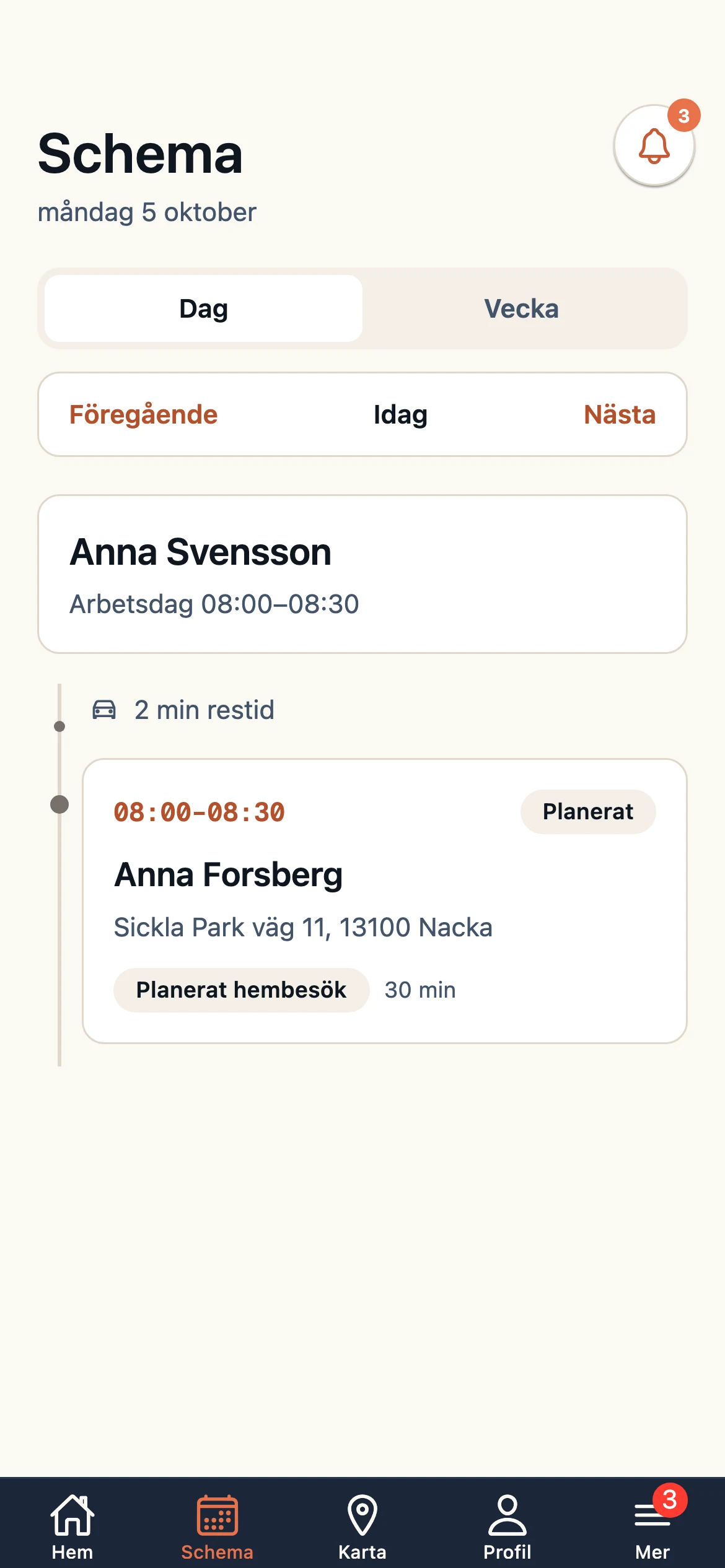
    Once the home-care organization has reviewed and published the schedule in Caire, I can see my upcoming visits in the client app: who is expected, a reasonable time window, and the current status.

    The care worker uses the same published plan in their app, with the day's visits, route, and the information needed for each assignment.

    The client and care-worker apps show the same published plan from their respective perspectives.
    0607

    When something changes

    The planner reviews and publishes

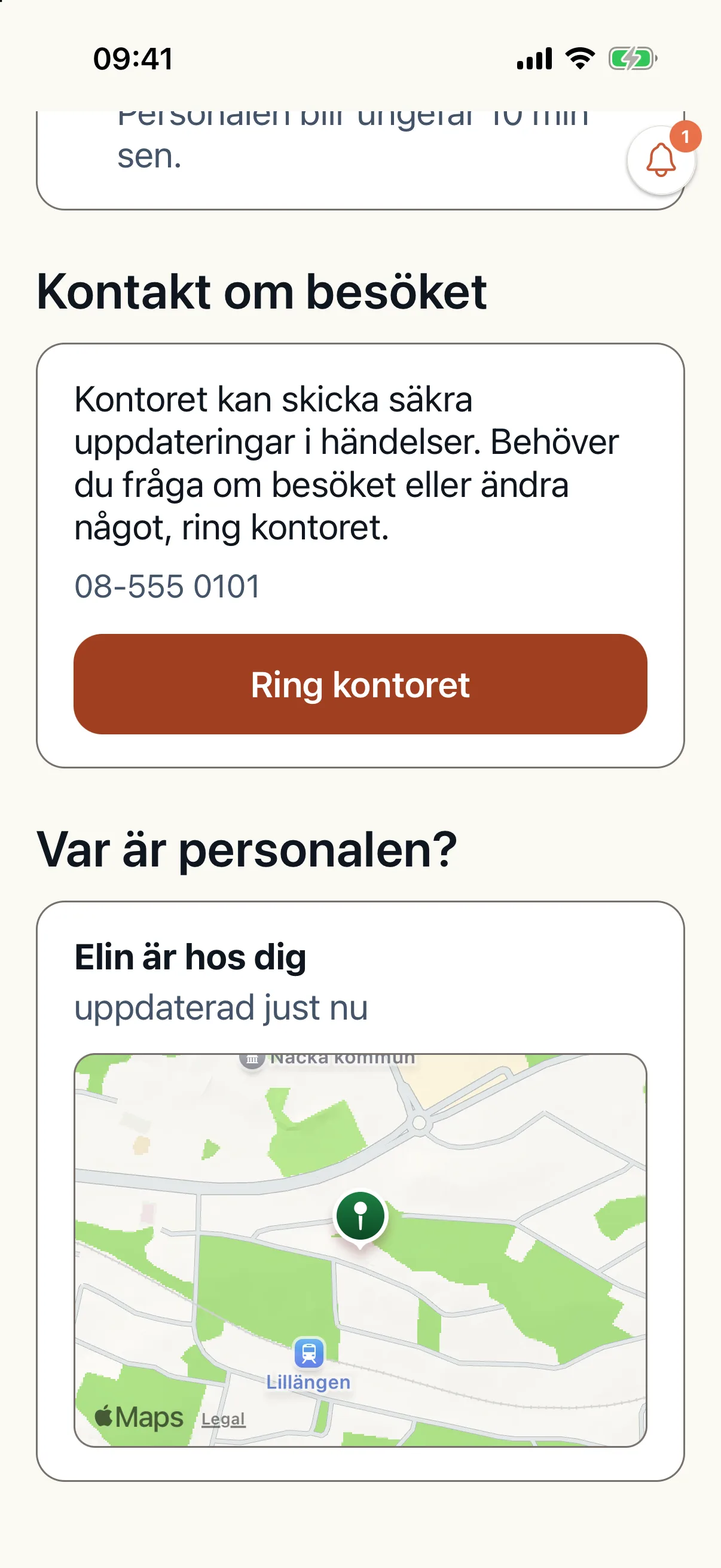
    When a delay or staffing change occurs, the planner can see the consequences, compare options, and publish an updated plan. The information then changes for everyone affected.

    An app cannot create staff who do not exist. A better system can identify the problem earlier and show which people will be affected.

    A change is reviewed by the planner, approved, and published to everyone affected.
    0707

    Agency

    I can plan my own day

    The difference may sound small: a name, a time window, and an update when something changes.

    For the person waiting at home, it is significant. It is the difference between planning your day and waiting for a doorbell that could ring at any moment.

    A clear daily plan with upcoming visits, time windows, current status, and the planned care worker.

    Five thousand visits from the inside

    Over roughly five years and more than 5,000 home-care visits, the same patterns kept returning.

    Information lived in different places. Plans were difficult to adjust when someone called in sick, a visit took longer, or traffic changed the route. Care workers had to rush to hold the day together. The person waiting at home was rarely told what had happened.

    Home care cannot be run like a factory. People need different amounts of time, and an unexpected need must sometimes take priority over a schedule. Change is part of care. The systems fail when they cannot manage that change and inform the people affected.

    I watched care workers rescue the day again and again. Their experience and commitment kept the service running while the structures around them made the work unnecessarily difficult.

    Those visits became an education I would never have chosen, but they gave me an understanding no report or meeting could provide. I saw the consequences of planning in my own home.

    I am bound by a schedule I cannot see.
    The common thread

    Everything I had done prepared me for this

    I do not believe illness automatically has a meaning. I would not have chosen MS. But I can choose what I do with the experience it has given me.

    1. 1Technology

      I learned how to build

      Twenty years in technology taught me to understand complex flows, dependencies, and systems that must work for many people at once.

    2. 2Illness

      I came to depend on the systems

      MS taught me what it is like to depend on a system that shapes daily life while offering little visibility to the person it serves.

    3. 3Home care

      I saw what was missing

      More than 5,000 visits showed me where planning fails and what that costs in time, stress, and independence.

    Everything I had done taught me how to build. Home care taught me what needed building.

    The system I needed myself

    Caire began with a simple question: Why should someone receive less information about tomorrow's care than about a parcel delivery?

    It would take more than another standalone schedule. The office, care workers, and the person waiting at home needed one shared, current plan.

    Caire brings visits, time windows, staffing, skills, travel, continuity, and daily changes into one planning flow. The system can balance those needs and present reviewable proposals to the planner. A person still evaluates, approves, and publishes the schedule.

    That matters. Home care is too important for decisions no one can explain or review.

    AI as an enabler

    The goal is not to replace care workers or automate human judgment. The goal is to remove the friction that steals time from what truly matters.

    AI can compare many dependencies quickly, find conflicts, and show possible solutions. It cannot hold a hand, notice a change in someone's health, or build the trust that grows between people over time.

    The best technology in care is often the technology people notice least. It has done its job when the care worker has a more reasonable day, the planner can make better decisions, and the person receiving care no longer has to carry the organization's uncertainty.

    The work I want to give my life to

    There is nothing romantic about building a company while my body sets new limits. Some days the work moves more slowly. Sometimes the plan must change. But the mission has become clearer.

    I want the next person who receives home care to be able to see and plan their day. Care workers should be able to trust their tools instead of compensating for them every day. Planners should have current, complete information when difficult decisions need to be made.

    Calling it a life's work may sound grand. To me, it is very concrete: a more predictable day, a message that arrives in time, and more minutes available for care.

    That is why Caire exists. It is the work I want to devote the rest of my professional life to.

    Unlikely is not the same as impossible.

    Will you help us build a better day?

    If you work in home care and recognize these problems, my team and I would like to hear from you. See how Caire connects the plan or tell us what makes your working day harder.