Local value and inherited value
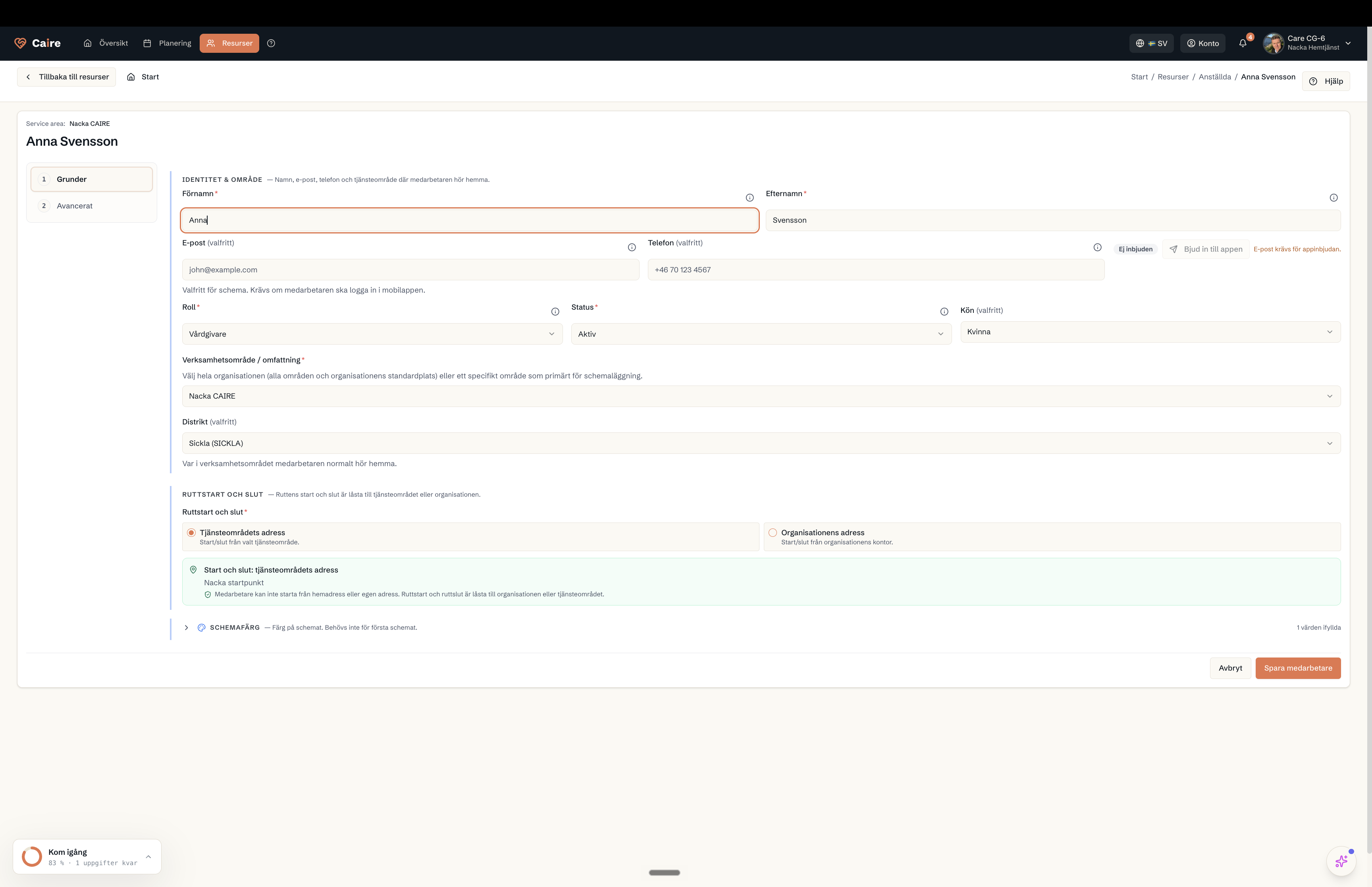
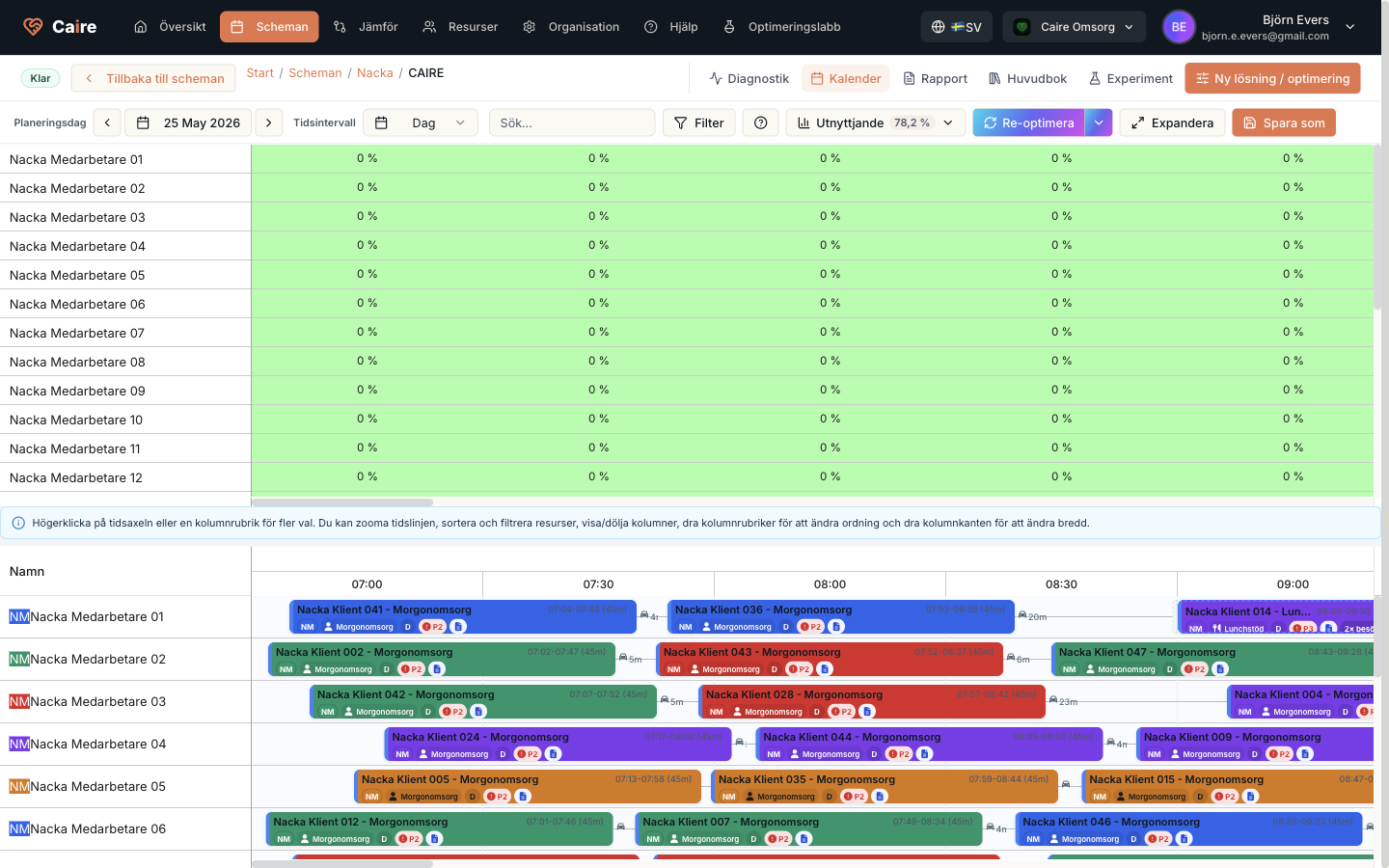
Employee data is the supply side of planning. The first schedule needs active employees with a unit and an effective shift or capacity source. Skills, districts, transport, and cost then make recommendations more precise.
Employees and shifts
The supply side of planning: who can work, when they work, and which skills they have.
| Field | Level | Why it matters | Used for |
|---|---|---|---|
| First and last name | First schedule | Identifies the employee in lists and schedules. | Assignments, continuity, and reports. |
| Unit | First schedule | Connects the employee to the correct team. | Schedule selection and eligible capacity. |
| Shifts or capacity | First schedule | Shows when the employee can work. | First schedule and capacity diagnostics. |
| Skills, district, and cost | Better metrics | Makes matching more precise after the first schedule. | Unassigned visits, continuity, travel, and cost. |
Why it affects efficiency
Shifts define available capacity. Cost makes solution comparisons more reliable. Districts show whether an employee fits the client's local area.
Before and after
Before completion, Caire can plan with basic employee data, but recommendations stay broader. After completion, it becomes clearer which shifts, districts, and cost assumptions affect the solution.