Help articles
How to do it, step by step: upload, analysis, fine-tuning, publishing, and follow-up.
- Efficiency
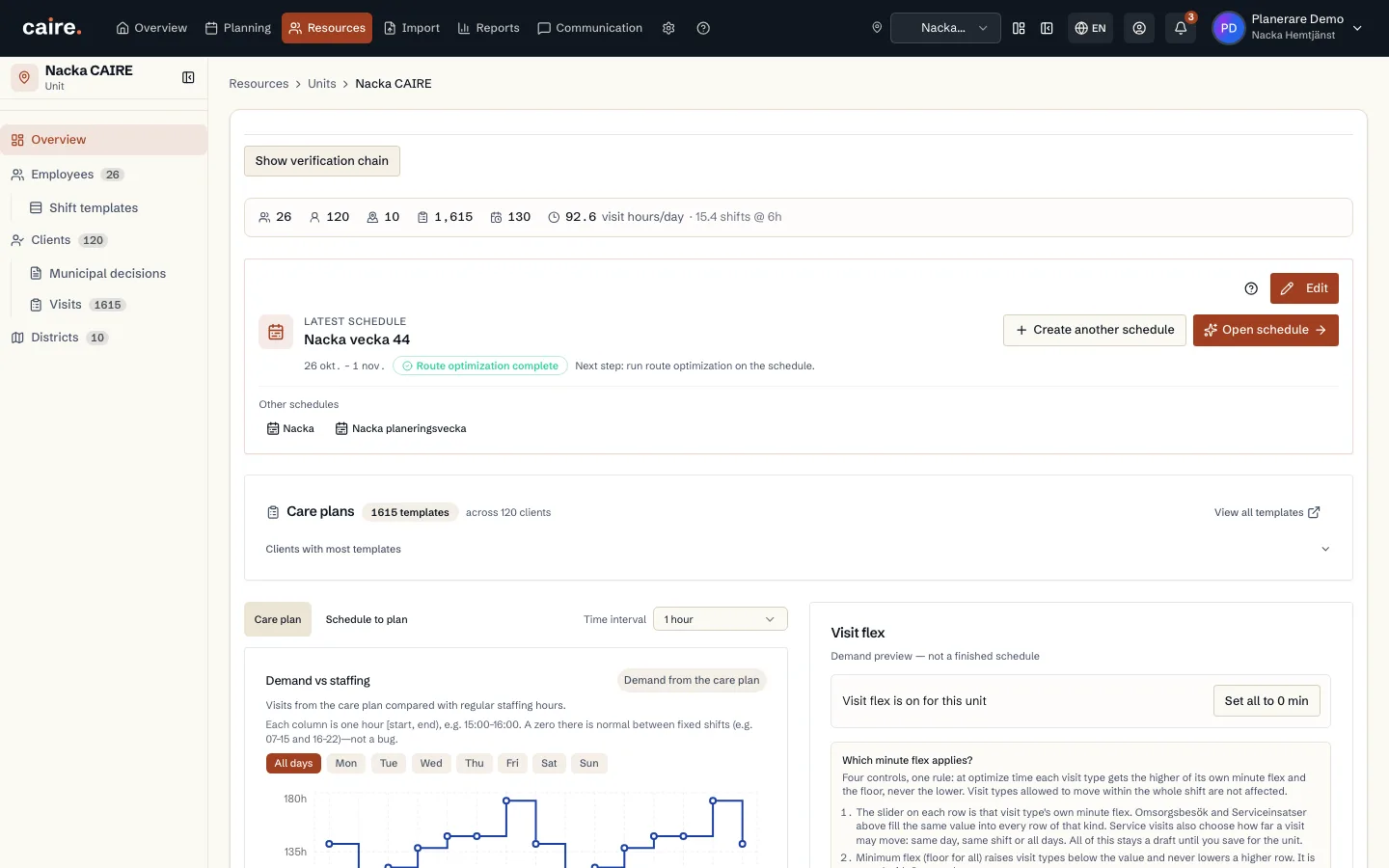
Demand and inset flex
On the unit overview, the chart shows demand. The sliders are inset flex (widen allowed time windows in the preview). Use recommended values to reduce the peak–floor gap. The scope can be saved to the unit or used only for the next schedule proposal. It does not change care plans.
Read guide: Demand and inset flex - Onboarding
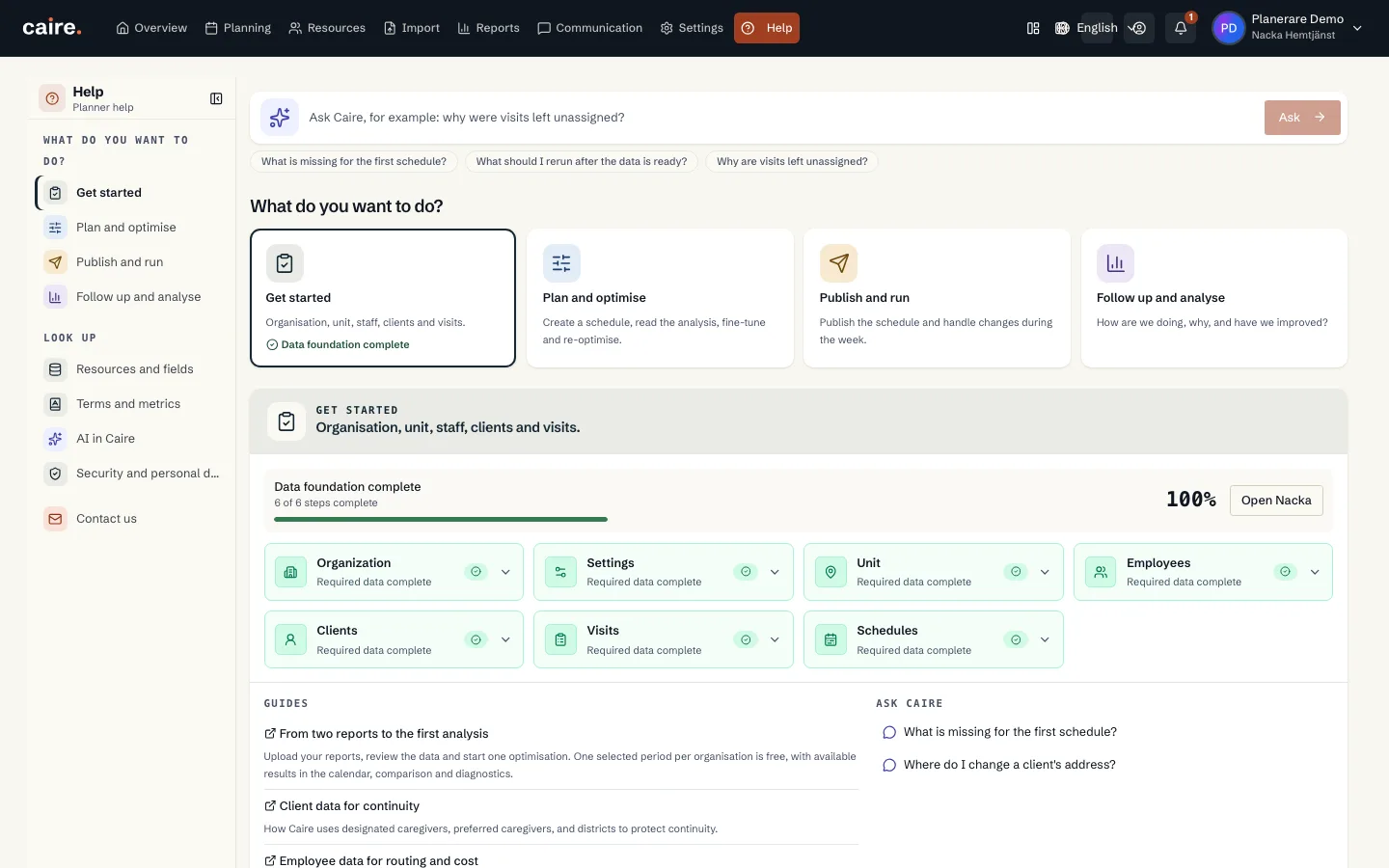
From two reports to the first analysis
Upload your reports, review the data and start one optimisation. One selected period per organisation is free, with available results in the calendar, comparison and diagnostics.
Read guide: From two reports to the first analysis - Onboarding
From analysis report to a decision-ready calendar
Read the source planned and evidenced actual state, follow CAIRE candidates in the background, and compare them in the same calendar.
Read guide: From analysis report to a decision-ready calendar - Onboarding
Optimization readiness
See which data is enough for the first schedule and which extra fields unlock stronger continuity, efficiency, and diagnostics.
Read guide: Optimization readiness - Continuity
Client data for continuity
How Caire uses designated caregivers, preferred caregivers, and districts to protect continuity.
Read guide: Client data for continuity - Efficiency
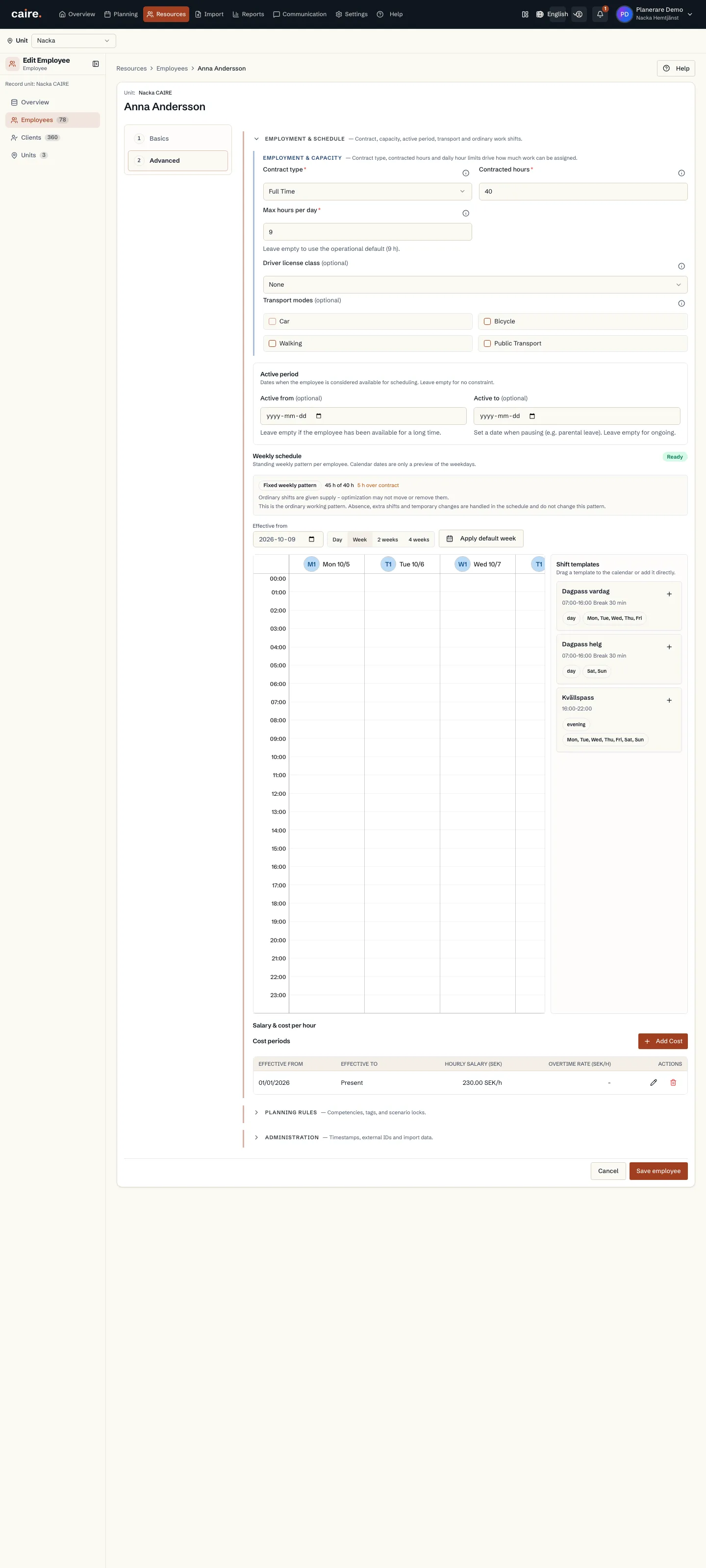
Employee data for routing and cost
How costs, shifts, and districts are used in routing and capacity analysis.
Read guide: Employee data for routing and cost - Efficiency
Districts and coverage
How districts reveal local demand, local capacity, and routes that cross the wrong area.
Read guide: Districts and coverage - Efficiency
Walking districts
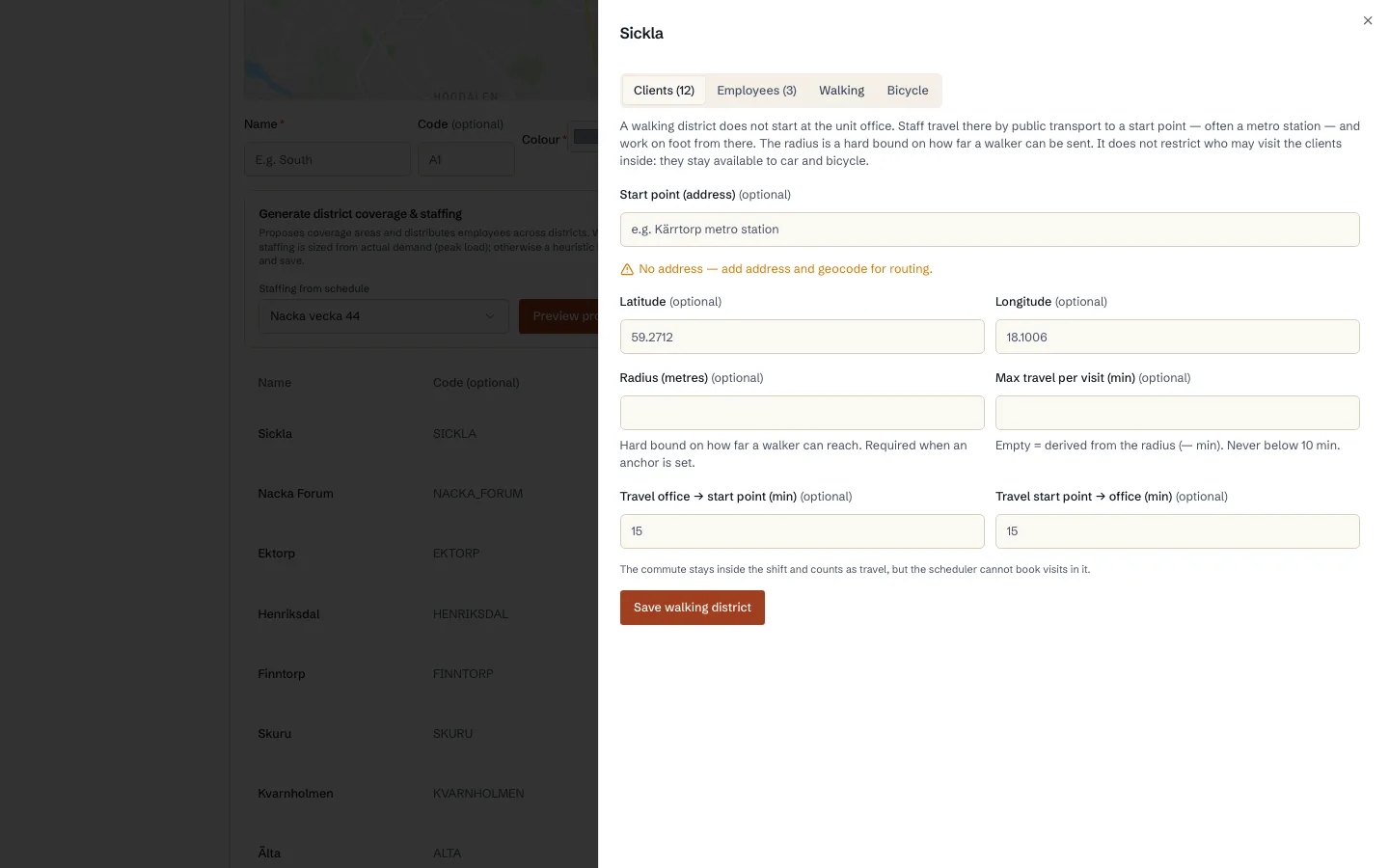
How a walking round is planned from a start point instead of the office, with the commute counted as paid time.
Read guide: Walking districts - Time windows
Preferred time, allowed window, and service properties
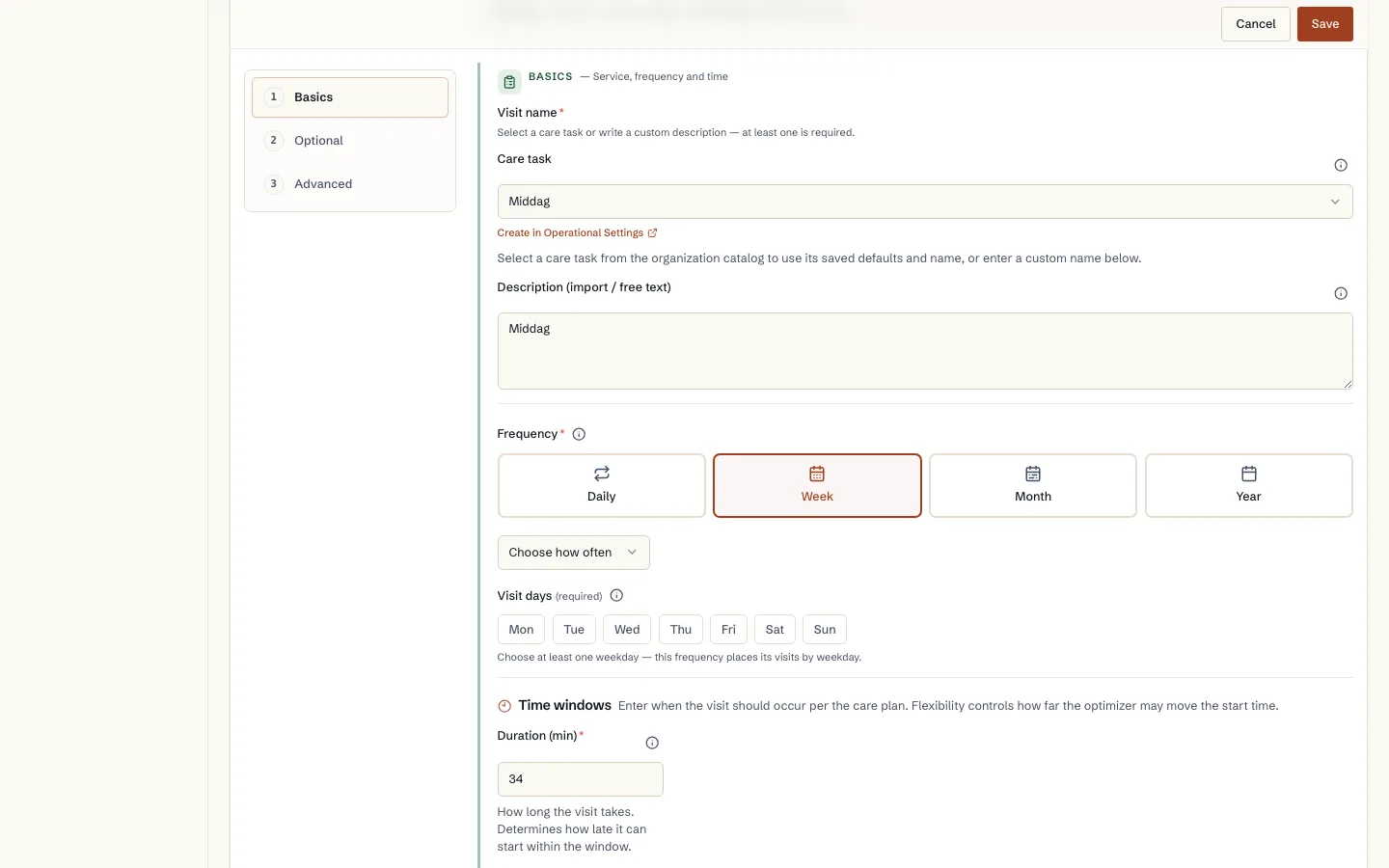
See the difference between preferred time and the allowed time window, and between routed field visits, office work, overlap, and double staffing.
Read guide: Preferred time, allowed window, and service properties - Diagnostics
Schedule diagnostics
How to locate a bottleneck in time and review the visits and shifts it affects.
Read guide: Schedule diagnostics - Solutions
Switch solution in the same calendar
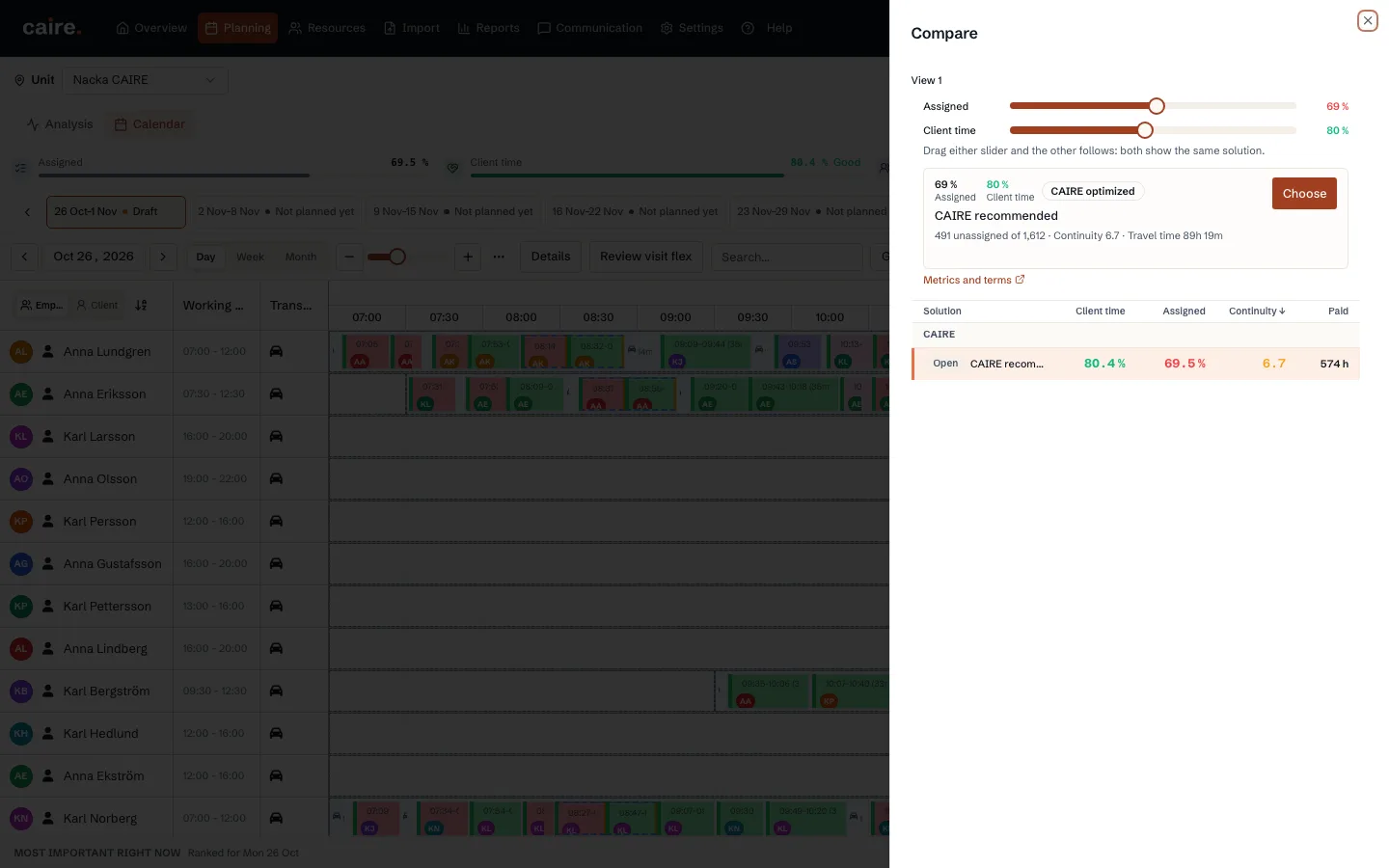
Compare source baselines, Coverage, and efficiency levels without leaving the calendar date or view.
Read guide: Switch solution in the same calendar - Solutions
Mobile app for client, employee, and family
See how Caire's mobile app can be shown to clients, employees, and family without mixing read-only access, schedule work, and administrator settings.
Read guide: Mobile app for client, employee, and family - Security
Security, sign-in and the data processing agreement (DPA)
Who is responsible for the personal data, how you accept the DPA, what it unlocks, and where you see and control access to your data.
Read guide: Security, sign-in and the data processing agreement (DPA) - Security
Journal: social documentation under SoL
How to switch on Journal, who may read and write, and how signing, corrections, the access log and export work.
Read guide: Journal: social documentation under SoL - Solutions
Sick calls and staffing
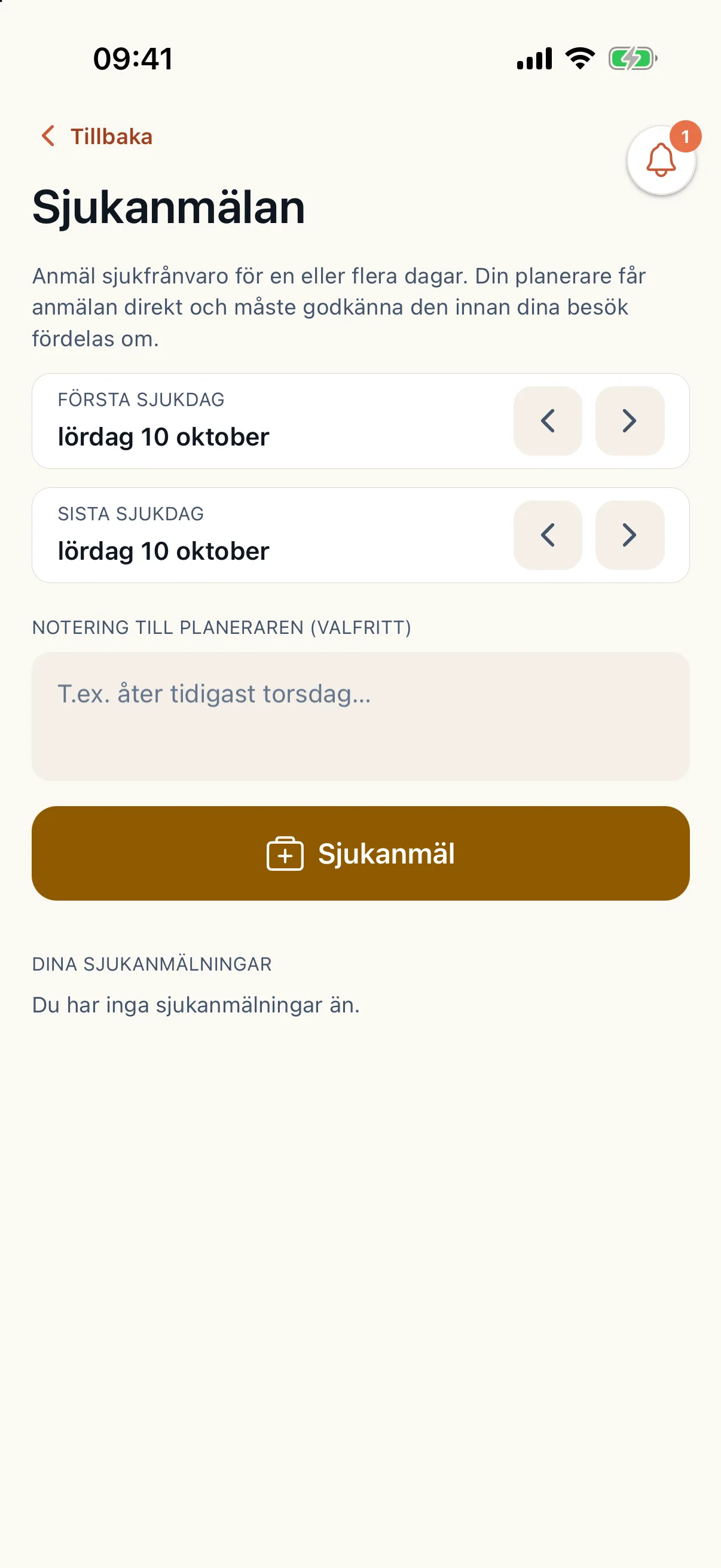
How a sick report goes from the app to new routes: the gaps in the published plan, Caire's ranked cover, your approval and open-shift invitations.
Read guide: Sick calls and staffing - Diagnostics
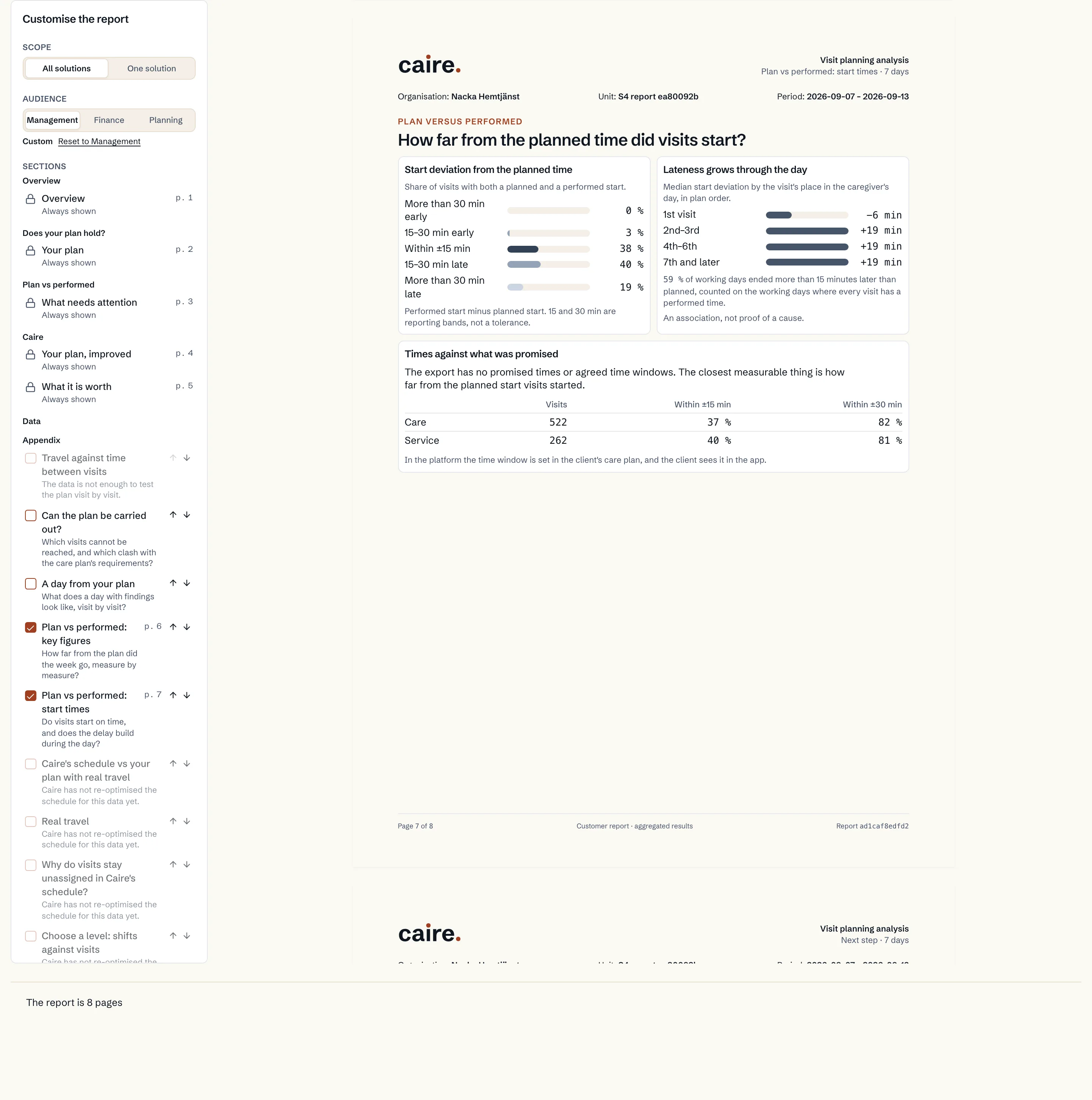
Plan versus reality
The report that compares your plan with the visits that were actually performed, only where the source data shows performed times. It starts with the free analysis.
Read guide: Plan versus reality - Solutions
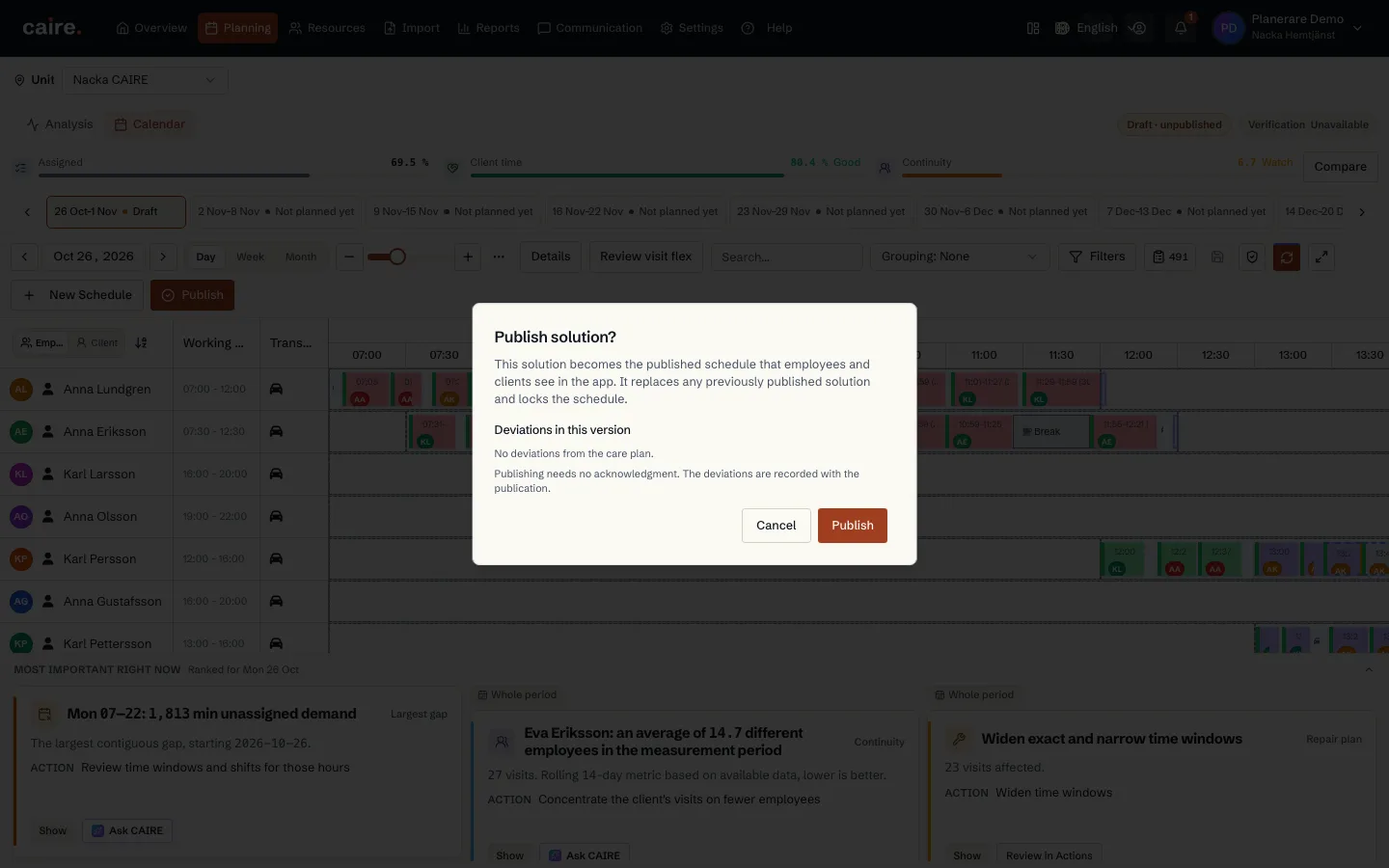
Publish a schedule
From draft to the plan staff and clients see: new versions before publication, one publication per unit and period, and quick updates afterwards.
Read guide: Publish a schedule - Onboarding
Care decisions on the client
How each care decision (biståndsbeslut) is stored on the client with its granted time, how performed time is followed month by month, and how a decision received as a PDF is reviewed before it is stored.
Read guide: Care decisions on the client - Diagnostics
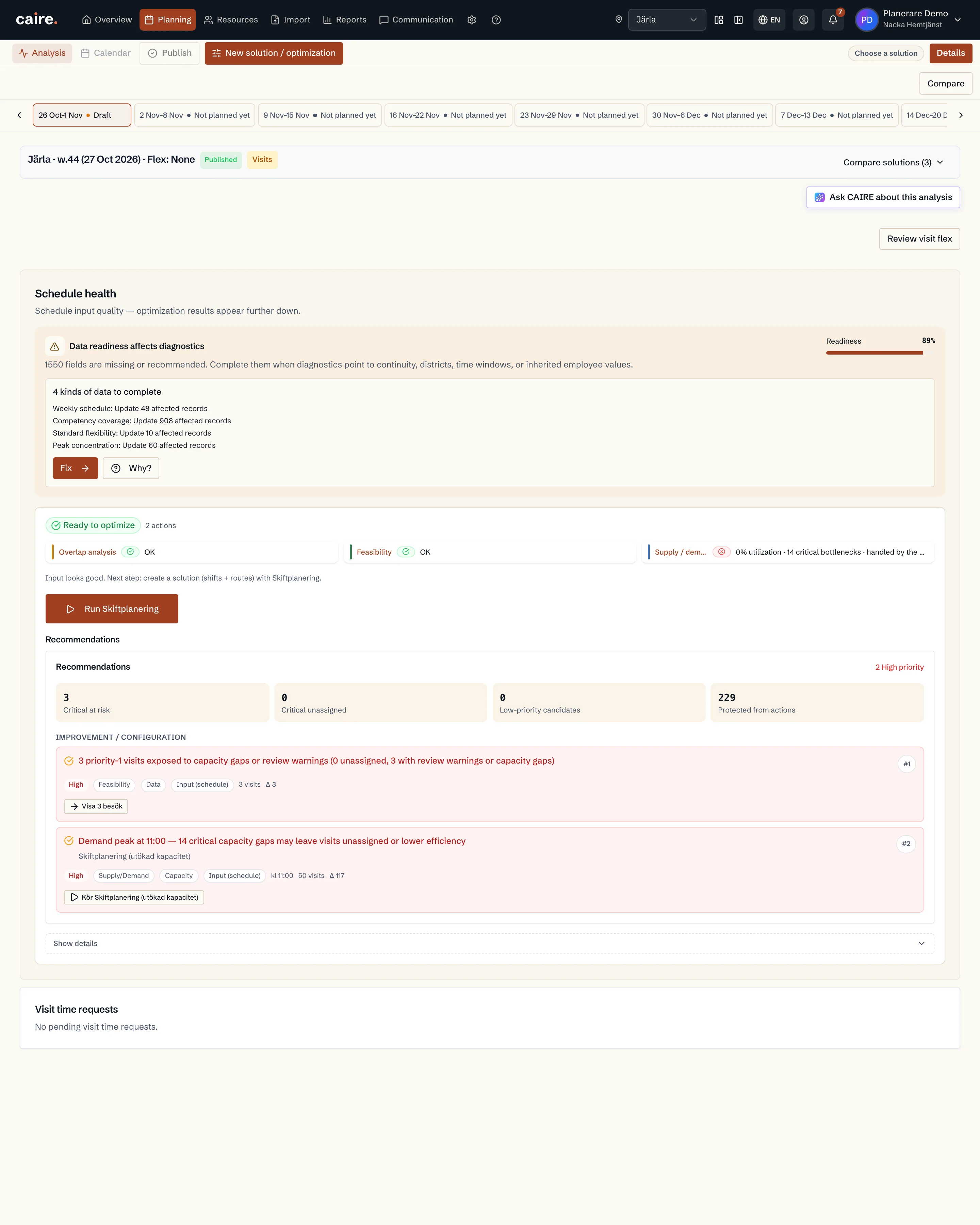
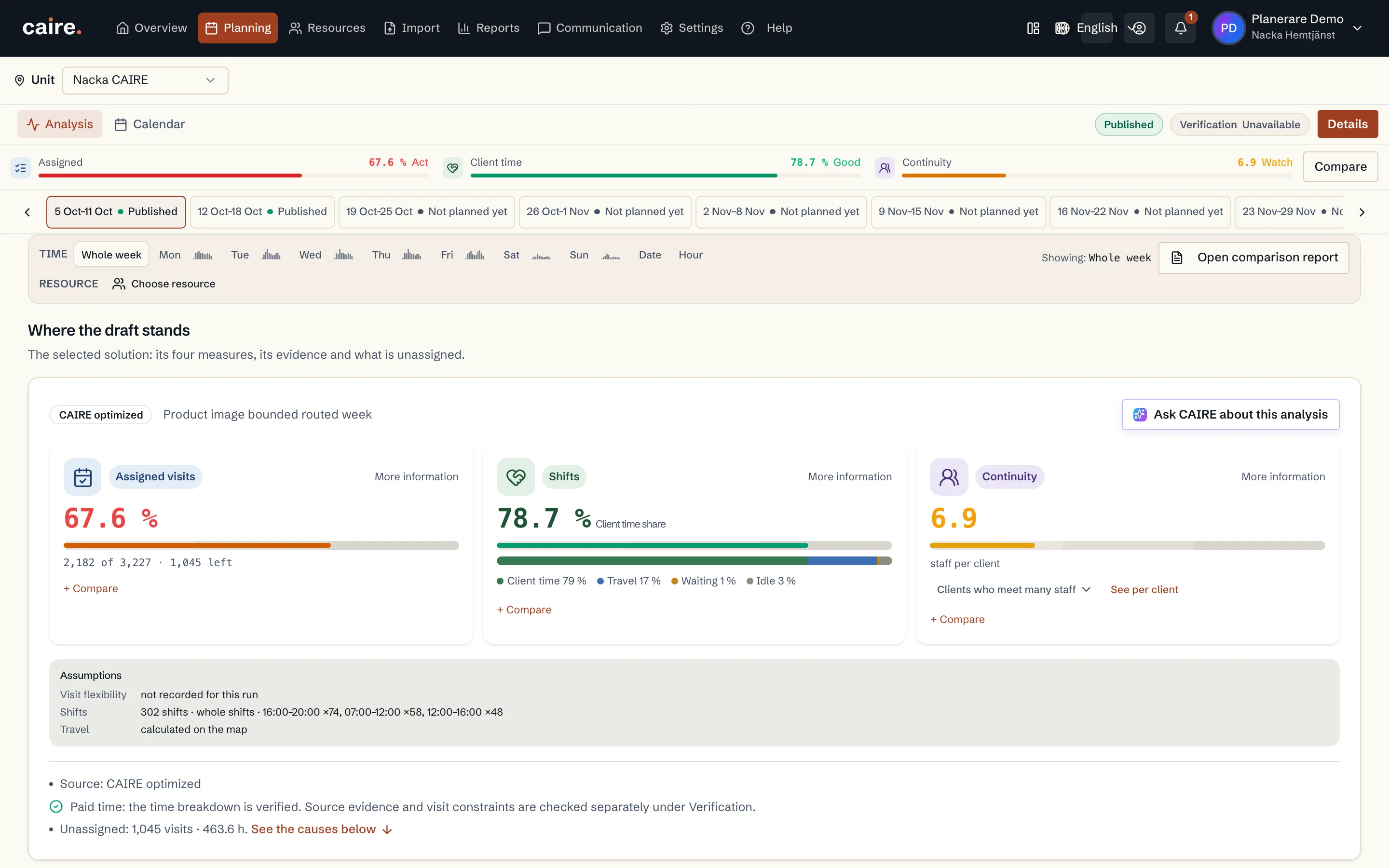
Analysis — reading and fixing a draft
How to read Analys top to bottom, the seven most common states of a draft and the lever that belongs to each.
Read guide: Analysis — reading and fixing a draft - Solutions
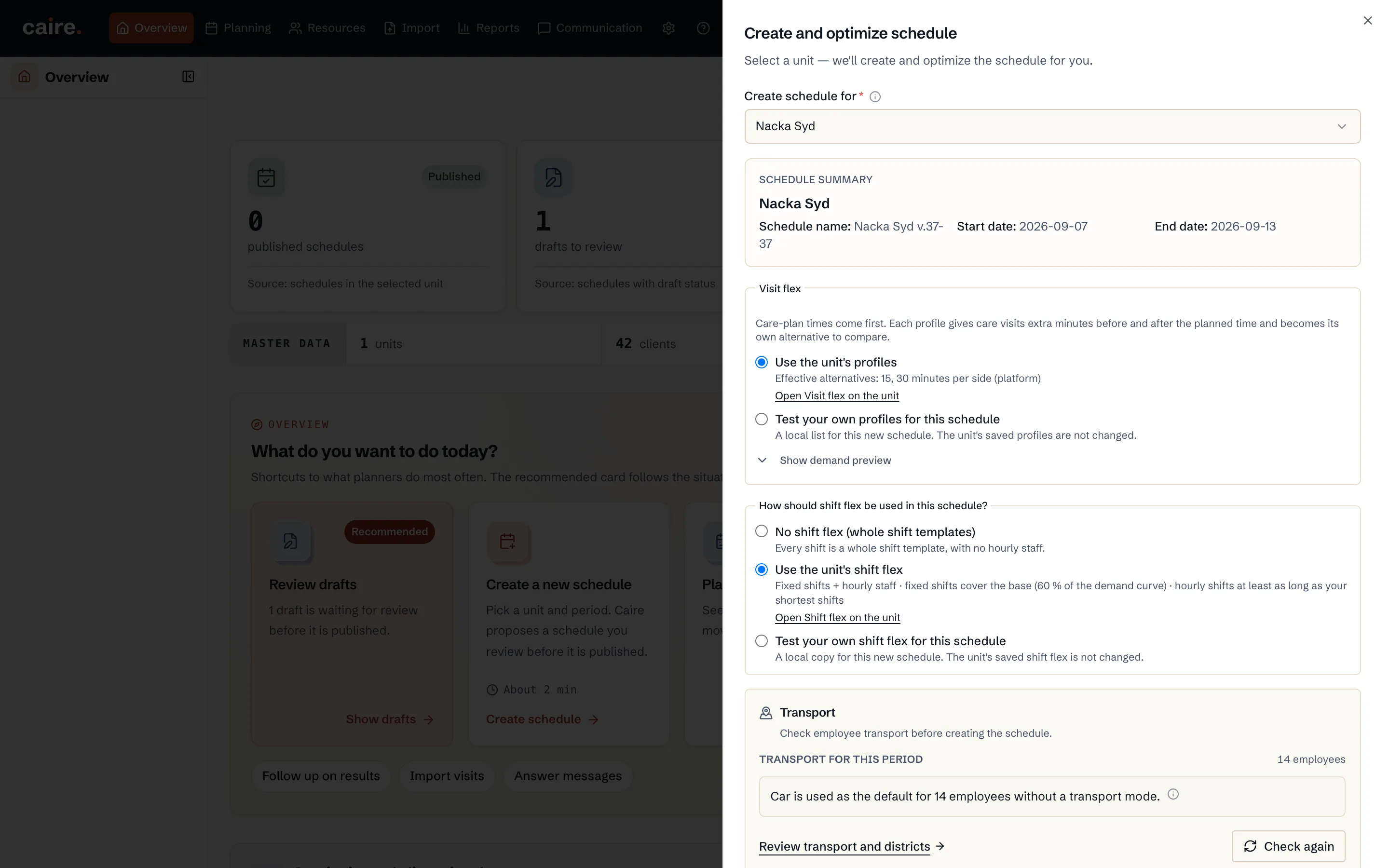
Create a schedule
How the unit's clients, visits, caregivers and shift templates become a schedule for a period: one click gives the unchanged schedule and the visit-flex alternatives side by side.
Read guide: Create a schedule