- For
- Coordinator · Administrator
- Type
- Guide
- Before you start
- Check the correct unit, employee and period you will work with.
What districts are
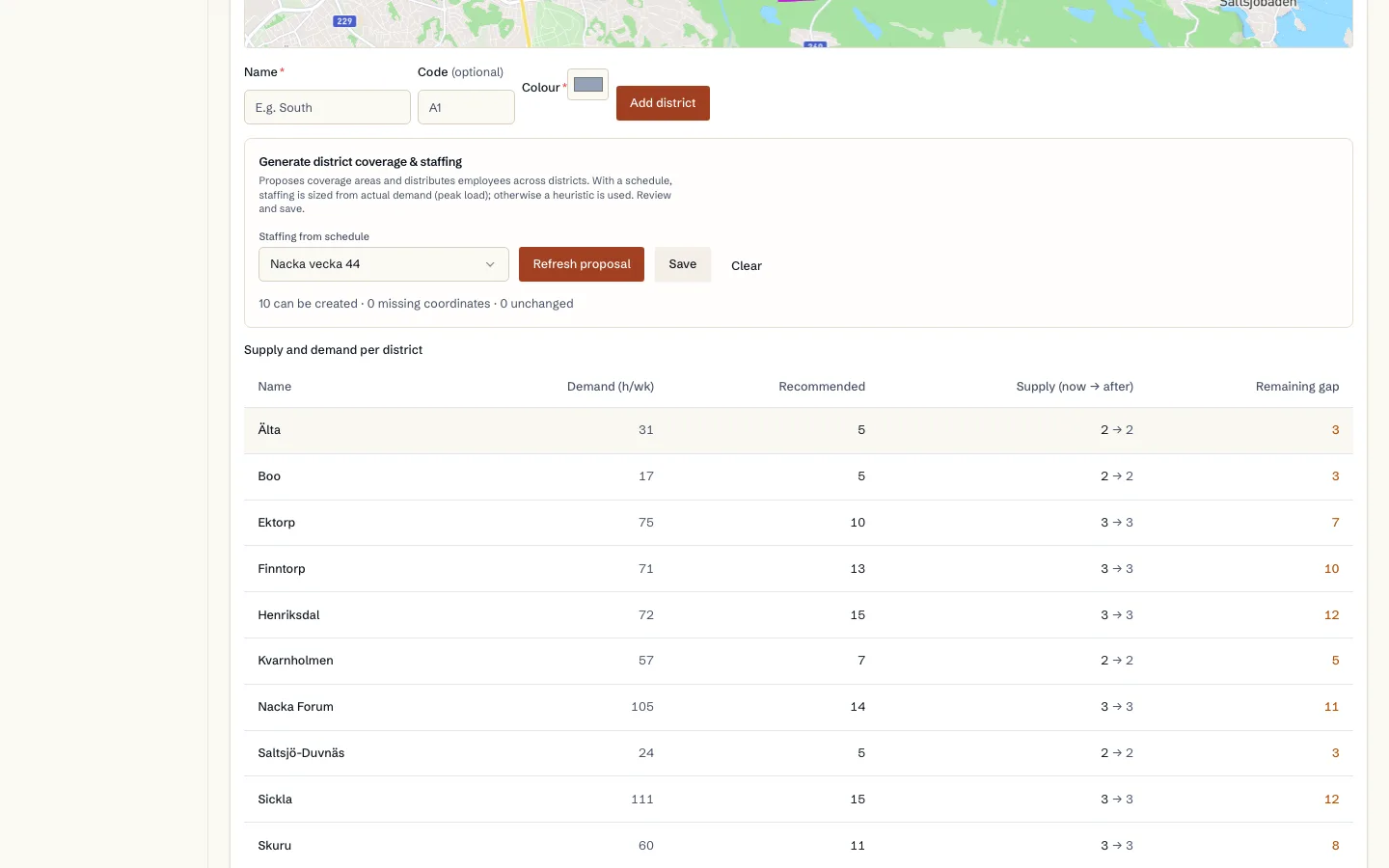
A district is a smaller area inside a unit. It helps Caire understand whether clients and employees belong to the same local operating context.
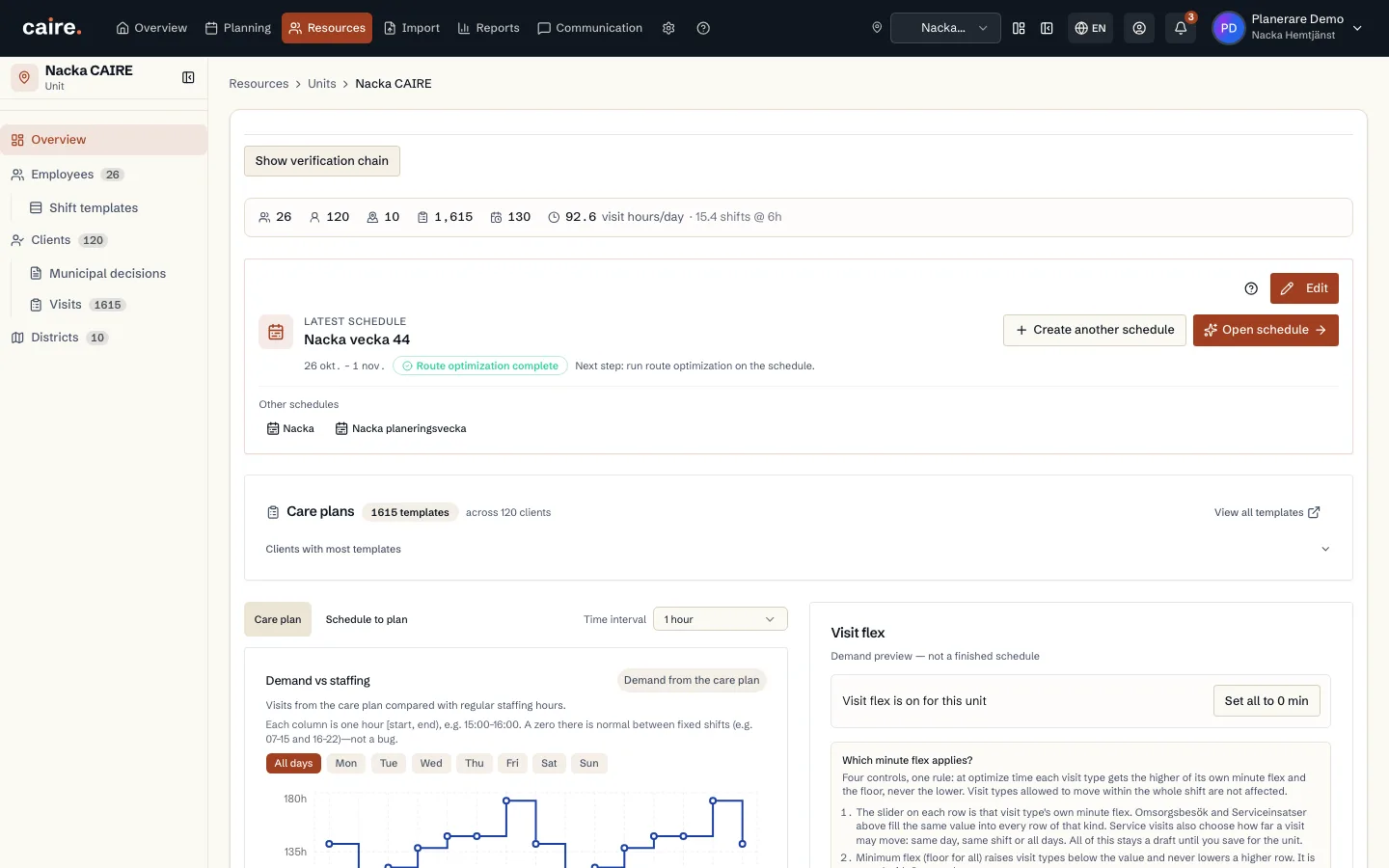
Unit
The planning boundary: the team, clients, employees, and period scheduled together.
| Field | Level | Why it matters | Used for |
|---|---|---|---|
| Name | First schedule | Makes the unit selectable in schedules and resources. | Planning, filtering, and reports. |
| Address and coordinates | First schedule | Provides route start when employees have no explicit start point. | Routes, travel time, and data readiness. |
| Districts | Better metrics | Splits an area into local groups without creating separate schedules. | Local capacity, route fit, and continuity diagnostics. |
District
A local area inside the unit for geographic matching.
| Field | Level | Why it matters | Used for |
|---|---|---|---|
| Coverage area | Better metrics | Describes the district's geographic boundary. | Route fit and local bottlenecks. |
| Client coverage | Better metrics | Shows demand in the district. | Supply-demand and continuity. |
| Employee coverage | Better metrics | Shows local capacity. | Capacity gaps and replacement suggestions. |
How it affects the schedule
When both clients and employees have districts, Caire can show whether a solution uses local capacity or whether routes cross area boundaries because of a shortage.
Data and resources
Result
You can check district coverage before planning.
Troubleshooting
Missing staff or shifts? Check the unit, weekly roster, absence and whether the value is local or inherited.
Did this article help?
Updated